When care is high—but challenge goes missing
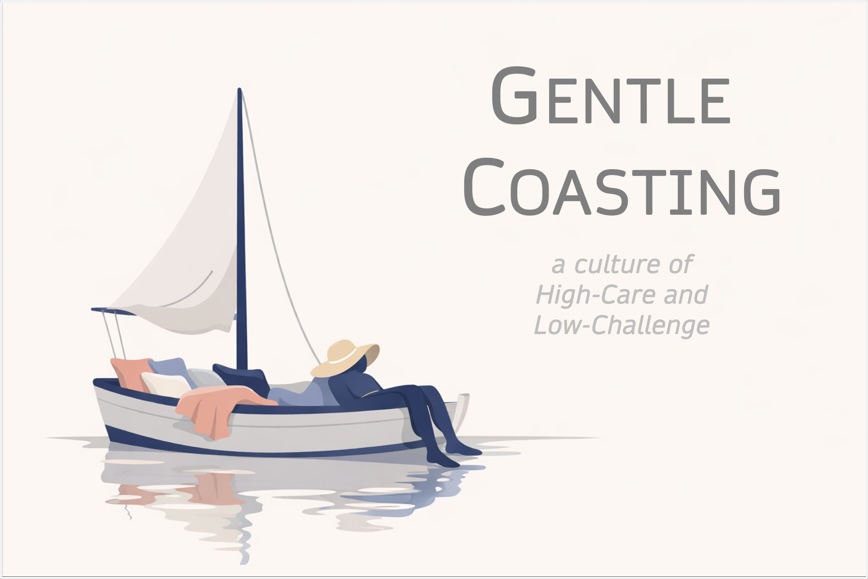
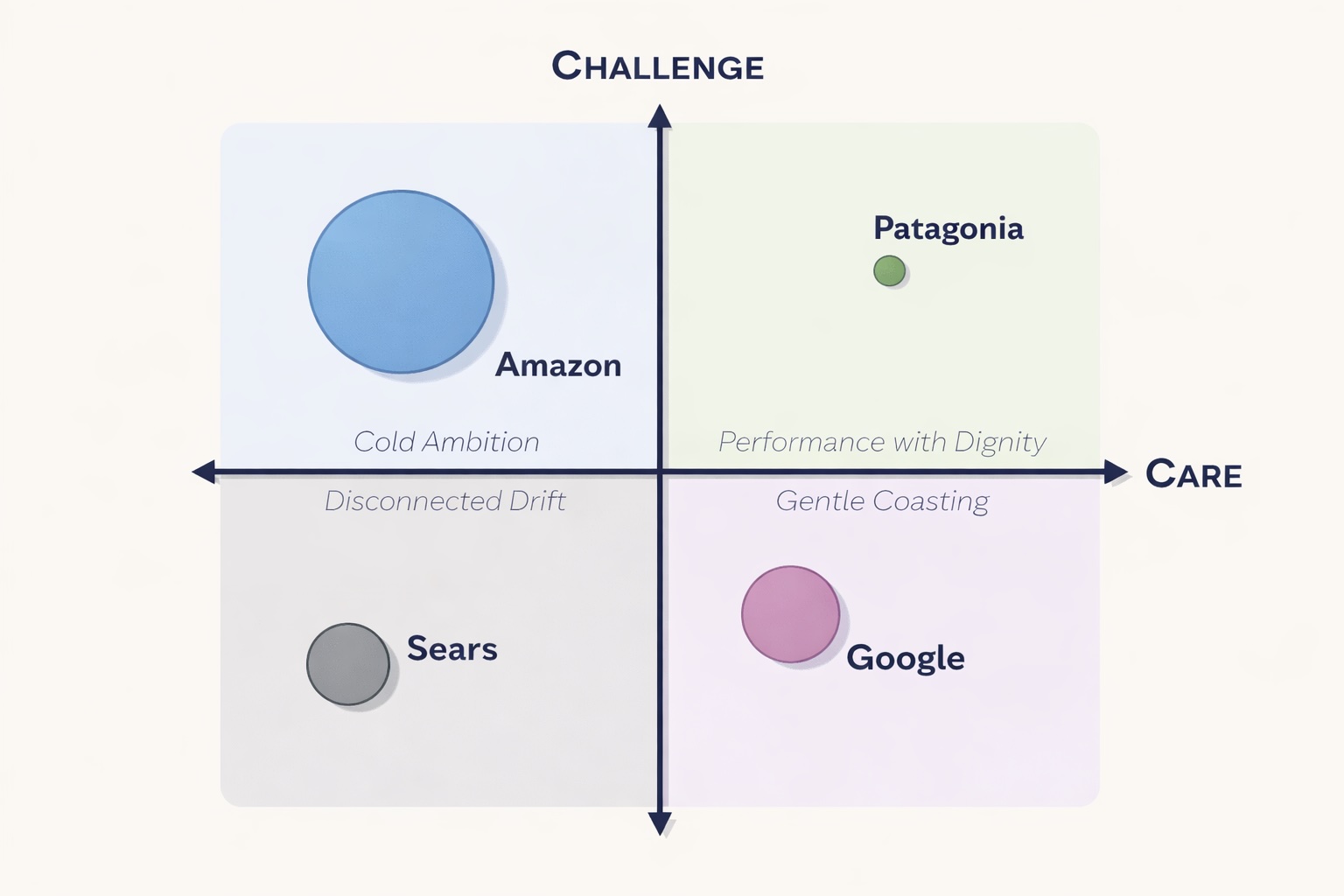
In our last post, we introduced the Care–Challenge Framework: a simple lens for understanding why cultures thrive, stall, or burn out. This time, we’re zooming into one of the most common (and most misunderstood) patterns we see in organisations: high care, low challenge—what we call Gentle Coasting.
It often starts with something genuinely good: leaders want people to feel safe, respected, and supported. The intention is healthy. The drift happens when care is no longer paired with clear standards, stretch, and follow-through.
What “low challenge” actually means
A low-challenge environment is one where expectations, accountability, and stretch are weak or inconsistent. In these cultures:
- People are rarely pushed to deliver their best
- Underperformance carries few consequences
- Difficult truths consistently go unspoken
The overall climate becomes safe but stagnant: comfortable in the short term, costly in the long term.
One important nuance: low challenge can exist whether care is high or low. But when care is high, it can mask the issue—because the culture still feels positive.
How Gentle Coasting shows up day to day
Here are some of the most visible signals leaders tend to recognise (often with a wince of familiarity):
- Overly “nice” interactions: hard truths, conflict, and direct feedback are avoided
- Low accountability: commitments slip without consequence; ownership is vague
- Blame replaces ownership: mistakes are deflected rather than addressed and learned from
- Slow or indecisive action: decisions stall because nothing forces movement
- Resistance to change: comfort and status-quo thinking become defaults
- Little challenge of ideas: weak debate, low innovation, minimal critical thinking
- Underperformance quietly tolerated: inconsistent standards become normal
- Lack of initiative: people wait rather than drive progress
- Apathy creeps in: “why bother?” becomes a silent norm
This is the “gentle” part of Gentle Coasting: the social environment stays polite. People are rarely openly hostile. But the system stops pulling people forward.
The costs and consequences
Low challenge doesn’t stay neutral. Over time, it tends to produce predictable outcomes:
- Lower motivation and energy: without stretch, people coast rather than grow
- Declining performance standards: mediocrity becomes acceptable
- Lower engagement: absence of drive erodes pride and purpose
- Less innovation: teams stop improving, adapting, and experimenting
- Talent frustration: high performers disengage or leave; underperformers stay
- Strategy drag: execution slows and opportunities slip
- Erosion of trust: when low performers face no consequences, fairness suffers
- Missed opportunities and slower growth as competitiveness declines
One of the most painful dynamics here is the fairness effect: when accountability is inconsistent, it’s not just performance that drops—trust drops, too.
The upside: what changes when you restore challenge
The good news is that this quadrant is often highly “recoverable,” because the care foundation is real. When you reintroduce the right kind of challenge—without losing the warmth—you typically see a fast shift in momentum.
Challenge is critical for performance because people come alive when they’re pushed to grow and supported along the way. The right balance of care and challenge reignites pride, ownership, urgency, and follow-through.
How to turn Gentle Coasting into growth
The goal isn’t to “toughen up.” It’s to retain the warmth, add the backbone.
Here are five practical moves that consistently work:
- Retain the warmth, add the backbone Name what’s good (care, kindness) and name what’s missing (stretch, honesty, standards).
- Leaders go first Role-model clear expectations, respectful candour, and genuine ownership and accountability—publicly.
- Make constructive challenge a habit Build routines for debate, feedback, and surfacing tough issues safely (so it’s not personality-dependent).
- Strengthen accountability practices Define promises clearly, follow through consistently, and shift from blame to ownership.
- Support people as they stretch Provide coaching, templates, and psychological safety so challenge feels like growth, not threat.
This is how you raise challenge without breaking trust: you make it consistent, visible, and fair.
Case example: a low-challenge organisation finds its edge
In one client organisation we supported over 2.5 years, the culture was high in care—but low in challenge. Feedback was often described as unclear or overly “nice,” and leaders knew they needed to dial up stretch and ownership without losing the warmth that made the culture special.
Over 30 months, the organisation saw measurable transformation:
- Double-digit improvements on major culture metrics, including: accountability, raising difficult issues, trust, and open communication
- Accountability became one of their top 3 most often selected descriptors for their culture
- Leaders began modelling the culture more visibly: clearer decisions, healthier feedback norms, and more aligned symbols and systems
- Individual leaders took genuine ownership of their team cultures
One leader reflected: “I understand now that others are watching. How I handle situations sets the tone.” Another: “I now set standards and hold people to them, including across other groups.”
This is what “challenge” looks like in the healthiest sense: clarity, ownership, honesty, and follow-through—held inside a culture that still feels human.
Coming next
In the next post, we’ll look at the opposite imbalance—what happens when challenge is high but care is low, and why that pattern can create performance in the short term while quietly degrading collaboration, learning, and retention over time.